Summaries & FAQs
Research made accessible. One-page summaries and FAQs break down each study’s key findings and methods to support informed policy decisions and further research.
What question does this study answer?
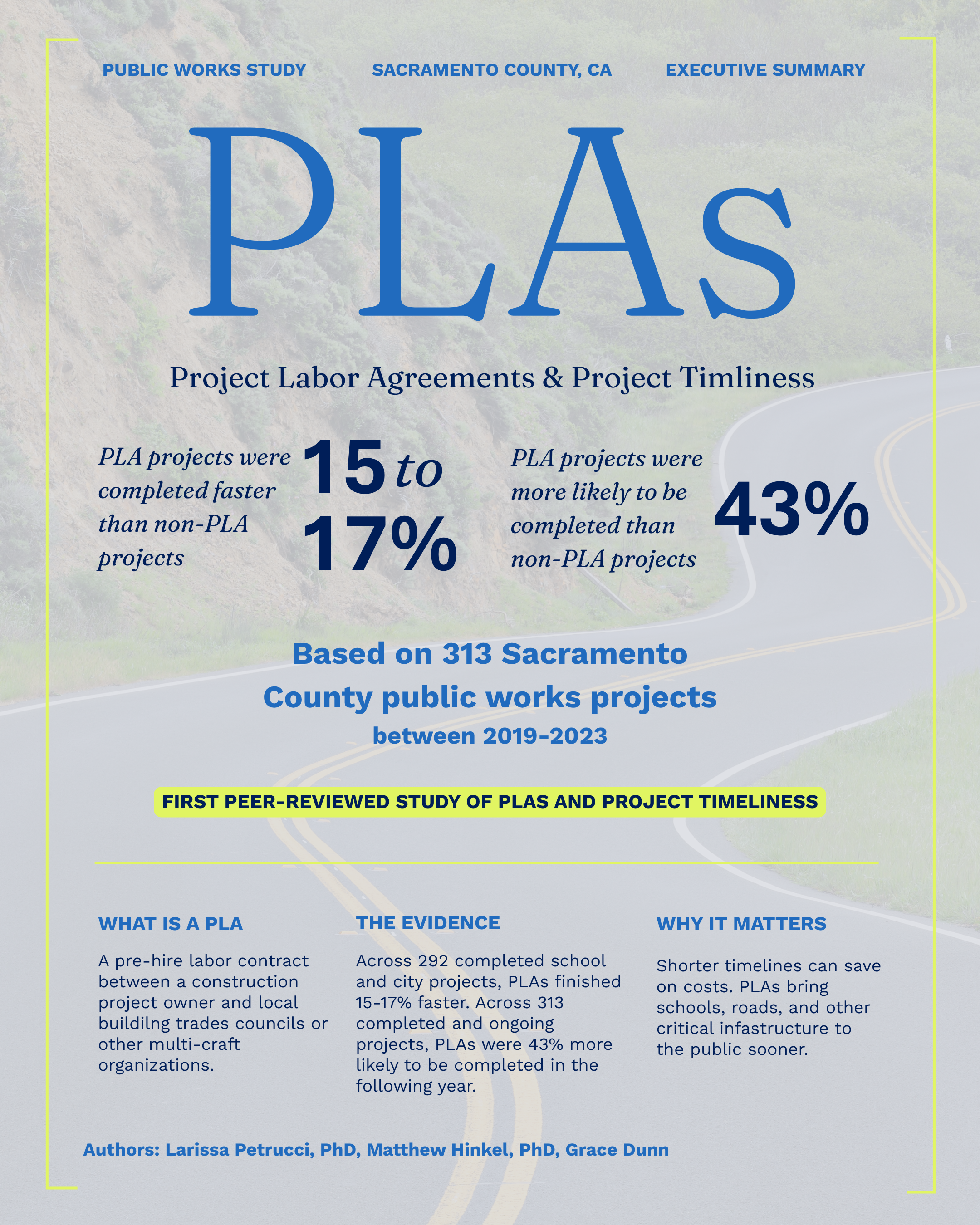
Whether Project Labor Agreements (PLAs), pre-hire contractors between project owners and building and construction trades councils are linked to faster public works construction. It is the first academic study of PLAs and project timeliness.
How did researchers get this data?
The data came from the DIR’s publicly available project search, publicly available electronic certified payrolls, and confirmation of PLA status by local building trades councils.
Is this an apples-to-apples comparison of PLA and non-PLA projects?
Yes. The study accounts for differences in size, type and budget, comparing PLA projects only to similar non-PLA projects.
Does “43% more likely to be complete” mean 43 percentage points?
No. It is a relative comparison: PLA projects had a 43% higher likelihood of completion than similar non-PLA projects in the following year after the data was collected.
What is peer-reviewed or an academic study?
Peer review means independent experts check a study’s methods and conclusions before publication. It is a standard of quality check.
STUDY FAQ
What types of projects were included?
All projects were public works prevailing wage projects valued at over $500,000, contracted by a city agency or school district in Sacramento County, and completed between 2018 and 2022. The projects included road and other non-building infrastructure, as well as building construction, alteration, and repair.
How did researchers get this data?
The data came from the DIR’s publicly available project search, publicly available electronic certified payrolls, Public Records Act requests to awarding agencies for project information, and confirmation of union status by local building trades councils.
Did the researchers compare similar projects?
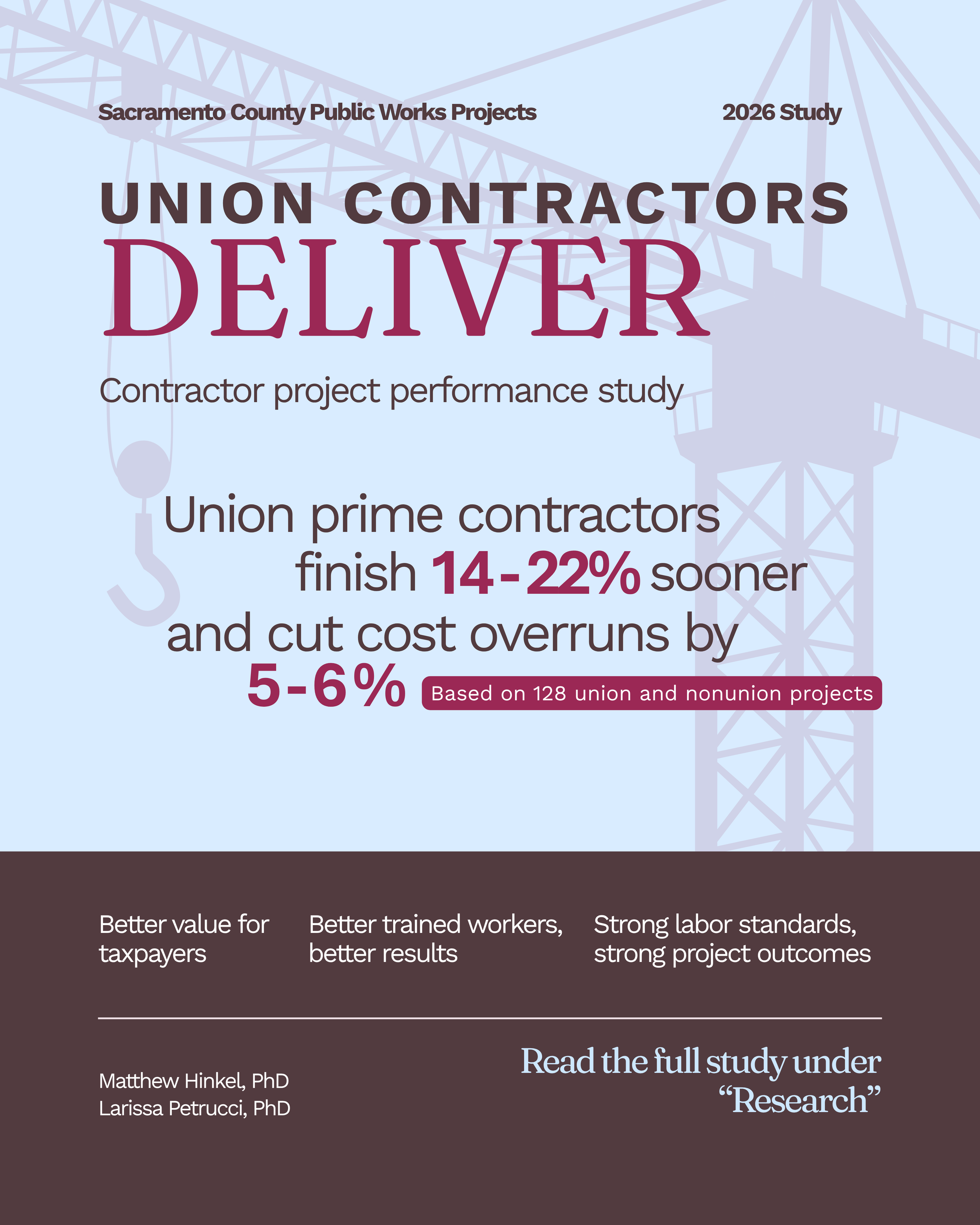
The researchers ensured that the 128 projects in their dataset were of similar size and complexity. 112 of the 128 projects had final costs of at least $1 million, and 107 of the 128 projects had a time to completion of at least 100 days. Additionally, all 128 projects took place in Sacramento County.
Why did the researchers look at the difference between starting and final cost?
A lot can change over the course of a construction project. Change orders, delays, and other factors often cause final costs to differ significantly from initial estimates. Comparing initial and final costs provides a more complete picture of how project costs change over time and the impact of union signatory contractors on both costs and project completion.
What can we learn from these findings?
The results show that union-signatory contractors can deliver strong outcomes on public projects while creating broader value for workers, contractors, and the public through better cost performance, shorter project durations, and sustained investments in workforce training.
STUDY FAQ
Social Media Posts
|
Fact Sheets
|
Infographics
|
FAQs
|
Social Media Posts | Fact Sheets | Infographics | FAQs |